Physical Activity and Exercise
Good physical fitness, health and wellness are all states of being that a person possesses.
On of the principle ways to achieve these states of being is by performing regular physical activity.
Physical activity is a general term that includes sports, dance and activities done at home or work, such as walking climbing stairs or moving the lawn.
Physical activity can be done to complete a specific job, to enjoy recreation or to improve your physical fitness.
Sometimes you do physical activity with a specific purpose in mind; other times you just do it with no real purpose other than enjoyment.
When people do physical activity especially for the purpose of getting fit, we say they are doing exercise.
Even though the terms physical activity and exercise have slightly different meanings, they are sometimes used interchangeably.
You should remember is that physical activity and exercise are important to your fitness, health and wellness.
Physical Activity and Exercise
Showing posts with label Exercise. Show all posts
Showing posts with label Exercise. Show all posts
Friday, April 9, 2010

Sunday, September 13, 2009
Effects of Exercise on Mood
Effects of Exercise on Mood
Everybody now knows how that physical activity and feelings or energy are integrally related.
Moderate exercise raises energy temporary, and physical conditioning through long term exercise leads to sustained levels of higher energy.
Of course too much physical activity can reduce energy but the low levels of physical activity that modern people maintain usually do not reach that point of diminishing energy, except in short term exertion or in conjunction with health problems.
Exercise also can reduce tension, although this mood relationship with exercise is not as clear as the exercise association.
In any event, the mood effects of exercise have been evident in study after study.
Therefore, in managing moods it is essential to be fully aware of how physical activity affects you.
Effects of Exercise on Mood
Everybody now knows how that physical activity and feelings or energy are integrally related.
Moderate exercise raises energy temporary, and physical conditioning through long term exercise leads to sustained levels of higher energy.
Of course too much physical activity can reduce energy but the low levels of physical activity that modern people maintain usually do not reach that point of diminishing energy, except in short term exertion or in conjunction with health problems.
Exercise also can reduce tension, although this mood relationship with exercise is not as clear as the exercise association.
In any event, the mood effects of exercise have been evident in study after study.
Therefore, in managing moods it is essential to be fully aware of how physical activity affects you.
Effects of Exercise on Mood
Sunday, September 6, 2009
Walking –The King of Exercise

Walking –The King of Exercise
As you walk grasp yourself in the small of the back and feel how your entire frame responds to every stride.
Notice how almost all of your muscle are functioning rhythmically.
No other exercise gives us the same body harmony of movement and improved circulation. Brisk walking is the best exercise for almost everyone.
Your walking should never be done consciously, No “heel and toe” business. No getting there in a certain time.
Let it be fun and natural. Walk naturally with head high, spine and chest lifted up. You will feel elated, so you will carry yourself proudly, straight, erect and with arm swinging.
Vow to become a health walker and make the daily walk a fixed item on your health program all the year around, in all kinds of weather.
If the outer world of nature fails to interest you, turn to the inner world of the mind. As you walk, your body ceases to matter and you become as near poet and philosopher as you will ever be.
By end of the days, the healthy functioning of your muscles and quickened blood circulating with a sense of balanced harmony and happiness.
Gardening is another rewarding form exercise. It may give enough exercise in the open to help keep you in good physical condition.
But gardening may not prevent weight gain if there is too little movement and because you are bent over more instead of being erect.
Walking –The King of Exercise
As you walk grasp yourself in the small of the back and feel how your entire frame responds to every stride.
Notice how almost all of your muscle are functioning rhythmically.
No other exercise gives us the same body harmony of movement and improved circulation. Brisk walking is the best exercise for almost everyone.
Your walking should never be done consciously, No “heel and toe” business. No getting there in a certain time.
Let it be fun and natural. Walk naturally with head high, spine and chest lifted up. You will feel elated, so you will carry yourself proudly, straight, erect and with arm swinging.
Vow to become a health walker and make the daily walk a fixed item on your health program all the year around, in all kinds of weather.
If the outer world of nature fails to interest you, turn to the inner world of the mind. As you walk, your body ceases to matter and you become as near poet and philosopher as you will ever be.
By end of the days, the healthy functioning of your muscles and quickened blood circulating with a sense of balanced harmony and happiness.
Gardening is another rewarding form exercise. It may give enough exercise in the open to help keep you in good physical condition.
But gardening may not prevent weight gain if there is too little movement and because you are bent over more instead of being erect.
Walking –The King of Exercise
Wednesday, June 17, 2009
Exercise and TV
Exercise and TV

Exercise before the TV
The television program may be a common excuse to obsessive at home. We do not go to fitness because on a program is an interesting film, we stop walking around with friends, because we are interested in certain series. If you belong in addicts of the TV, you can sitting before the television without having to cancel popular program, decrease to minimum. Follow the advice of the author of books Exercise between advertising blocks and take a good advantage of time. During each advertising block make10-ups and some jumps across the wire. During the show, which lasts one hour, you can exercise as 25 minutes. If you watch television for two hours, you practiced one hour. Perfect, right?
Exercise and TV

Exercise before the TV
The television program may be a common excuse to obsessive at home. We do not go to fitness because on a program is an interesting film, we stop walking around with friends, because we are interested in certain series. If you belong in addicts of the TV, you can sitting before the television without having to cancel popular program, decrease to minimum. Follow the advice of the author of books Exercise between advertising blocks and take a good advantage of time. During each advertising block make10-ups and some jumps across the wire. During the show, which lasts one hour, you can exercise as 25 minutes. If you watch television for two hours, you practiced one hour. Perfect, right?
Exercise and TV

Wednesday, May 20, 2009
Keep Your Love Relationship Alive, Hot and Fun!
My book, “Love From Both Sides – A True Story of Soul Survival and Sacred Sexuality,” tells the story of my husband dying in my arms and “coming back” to chat. Now you may be wondering, and how does that relate to “Rituals for Healthy Living?”
 It does, because during my own marriage, I insisted on creating lots of simple rituals. For instance, even though my husband and I were both busy, (Dan was a lawyer and I was a screenwriter), we tried to eat dinner together whenever we could. I cooked, set the table and lit candles. I insisted that we enjoy the small moments. I also insisted that we actually set aside time to “be together.” We made dates to sit on the couch, light a fire, share a glass of wine. We talked, sometimes we even read poetry. In those quiet moments, we remembered why we got married.
And if I was lucky? I got a massage from his wonderful, blacksmith hands, and then we’d make love. And taking time to make “love” a ritual, rather than something that happened at the end of an exhausting day, or worse… something that didn’t happen because we just had no energy left, kept our love alive and the sex hot!
And what was amazing? Even though Dan would sometimes make fun of my fussiness, after he died, he thanked me for insisting that we “honor” what we had together. So ladies? You’ll love my book, because I got an apology! And appreciation. Better late, than never, right?
Creating a sacred ritual of your own might help to keep your love relationship alive, hot and fun! And that in turn will help your own health. (And it might help you lose weight, because you need high levels serotonin to lose weight, and sex is an easy way to get it!) Also according to the new brain research, the more sex you have, the better your brain functions! That’s good news, yes?
So why not start thinking about fun, sexy rituals? According to a wonderful article in the New York Times Sunday Magazine, (1/25/09), what really excites women (and creates lots of beneficial chemicals in her brain) … is being desired by her lover. So maybe dance for your lover… become a goddess, and create a fun sexy ritual that will help you live a healthy life!
~ Stephanie Riseley
www.stephanieriseley.com
Stephanie is participating in the WOW! Women On Writing Blog Tour for her book Love From Both Sides – A True Story of Soul Survival and Sacred Sexuality
 It does, because during my own marriage, I insisted on creating lots of simple rituals. For instance, even though my husband and I were both busy, (Dan was a lawyer and I was a screenwriter), we tried to eat dinner together whenever we could. I cooked, set the table and lit candles. I insisted that we enjoy the small moments. I also insisted that we actually set aside time to “be together.” We made dates to sit on the couch, light a fire, share a glass of wine. We talked, sometimes we even read poetry. In those quiet moments, we remembered why we got married.
And if I was lucky? I got a massage from his wonderful, blacksmith hands, and then we’d make love. And taking time to make “love” a ritual, rather than something that happened at the end of an exhausting day, or worse… something that didn’t happen because we just had no energy left, kept our love alive and the sex hot!
And what was amazing? Even though Dan would sometimes make fun of my fussiness, after he died, he thanked me for insisting that we “honor” what we had together. So ladies? You’ll love my book, because I got an apology! And appreciation. Better late, than never, right?
Creating a sacred ritual of your own might help to keep your love relationship alive, hot and fun! And that in turn will help your own health. (And it might help you lose weight, because you need high levels serotonin to lose weight, and sex is an easy way to get it!) Also according to the new brain research, the more sex you have, the better your brain functions! That’s good news, yes?
So why not start thinking about fun, sexy rituals? According to a wonderful article in the New York Times Sunday Magazine, (1/25/09), what really excites women (and creates lots of beneficial chemicals in her brain) … is being desired by her lover. So maybe dance for your lover… become a goddess, and create a fun sexy ritual that will help you live a healthy life!
~ Stephanie Riseley
www.stephanieriseley.
Stephanie is participating in the WOW! Women On Writing Blog Tour for her book Love From Both Sides – A True Story of Soul Survival and Sacred Sexuality

Monday, May 11, 2009
Exercise and Hypertension
Exercise and Hypertension
Lifestyle plays a major role in the development of hypertension and any program to reduce blood pressure must take this into consideration.
Medical experts note that any changes that are implemented must be maintained if blood pressure is to be controlled in a long term basis.
Smoking should be moderated or preferably totally avoided and alcohol intake should be kept to a minimum.
Weight loss reduces blood pressure in this with and without hypertension and be primary goal for hypertensive who are obese or moderately overweight.
Other factors for reducing and controlling hypertension are increased exercise and stress management.
Regular exercise reduces stress and blood pressure, so it is highly recommended as an integral part of your life.
Consistent aerobic exercise can both prevent and lower hypertension.
Swimming, which is frequently prescribed as a non impact exercise to lower high blood pressure, can produce a significant decrease in resting heart rate (a sign of cardiovascular health) and systolic blood pressure in previously sedentary people with elevated blood pressure.
Exercise and Hypertension
Lifestyle plays a major role in the development of hypertension and any program to reduce blood pressure must take this into consideration.
Medical experts note that any changes that are implemented must be maintained if blood pressure is to be controlled in a long term basis.
Smoking should be moderated or preferably totally avoided and alcohol intake should be kept to a minimum.
Weight loss reduces blood pressure in this with and without hypertension and be primary goal for hypertensive who are obese or moderately overweight.
Other factors for reducing and controlling hypertension are increased exercise and stress management.
Regular exercise reduces stress and blood pressure, so it is highly recommended as an integral part of your life.
Consistent aerobic exercise can both prevent and lower hypertension.
Swimming, which is frequently prescribed as a non impact exercise to lower high blood pressure, can produce a significant decrease in resting heart rate (a sign of cardiovascular health) and systolic blood pressure in previously sedentary people with elevated blood pressure.
Exercise and Hypertension
Thursday, January 15, 2009
Fitness benefits of Hiking and Backpacking
Fitness benefits of Hiking and Backpacking
Hiking help increase and maintain fitness levels and contribute to health and well being. One of the great things about hiking is that you can use it to get in shape backpacking.
Hiking and backpacking are fun ways to burn calories, spend times with other people and eat well.
Sunlight offers vitamins D and E, both important for immune functions as well as increased serotonin levels, which elevate mood. Nature has a restorative power and can help alleviate depression.
 Contact with nature is correlated with living longer and actual biochemical changes occur in response to trees, plants and animals. As we enjoy the sights and sounds of nature, in addition to learning something about the nature environment, stress levels decrease and endorphins, which also elevate mood, are released.
We experience long term benefits from improving and maintaining physical fitness through hiking and backpacking both on the trail and at home. Moderate physical activity can result in lower healthy care cost and increased work performance.
Regular exercise improves mental healthy, providing a holistic sense of wellness, more positive moods and emotions, better mental clarity and better stress management skills, enabling us to better respond to the demands and joys of life.
This leads to higher self confidence, greater self competence, and better judgment and decision making.
Fitness benefits of Hiking and Backpacking
Hiking help increase and maintain fitness levels and contribute to health and well being. One of the great things about hiking is that you can use it to get in shape backpacking.
Hiking and backpacking are fun ways to burn calories, spend times with other people and eat well.
Sunlight offers vitamins D and E, both important for immune functions as well as increased serotonin levels, which elevate mood. Nature has a restorative power and can help alleviate depression.
 Contact with nature is correlated with living longer and actual biochemical changes occur in response to trees, plants and animals. As we enjoy the sights and sounds of nature, in addition to learning something about the nature environment, stress levels decrease and endorphins, which also elevate mood, are released.
We experience long term benefits from improving and maintaining physical fitness through hiking and backpacking both on the trail and at home. Moderate physical activity can result in lower healthy care cost and increased work performance.
Regular exercise improves mental healthy, providing a holistic sense of wellness, more positive moods and emotions, better mental clarity and better stress management skills, enabling us to better respond to the demands and joys of life.
This leads to higher self confidence, greater self competence, and better judgment and decision making.
Fitness benefits of Hiking and Backpacking
Wednesday, December 31, 2008
Active Lifestyle
 Active Lifestyle
One way is to set aside a special time for a formal exercise program, involving such planned activities as walking, jogging, swimming, tennis, aerobic dance, exercise to an exercise videotape, and so on.
But don’t underestimate the value and importance of just being more physically active throughout the day as you carry out your unusual activities. Both can be helpful.
The formal programs are usually more visible and get more attention. But being more physical in everyday life can also pay off. Consider taking the stairs a floor or two instead of waiting impatiently for a slow elevator.
 Park and walk several blocks to work or to the store instead of circling the parking lot looking for the perfect, up close parking space.
Mow the lawn, work in the garden or just get once in a while and walk around the house.
These types of daily activities often not view as “exercise,” can add up to significant health benefits.
Recent studies show that even small amounts of daily activity can raise fitness levels, decrease heart disease risk, and boost mood and the activities can be pleasurable, enjoyable ones. Playing with children, dancing, gardening, bowling, and golf….all these enjoyable activities can make a biog difference.
Active Lifestyle
Monday, November 24, 2008
Exercise for Your Health
Exercise for Your Health
Exercise can have many additional benefits, beyond helping you lose weight and keep it off and being an important part of building a healthy, strong, flexible body that will serve you well for years to come.
 Exercise can safeguard your mental health. Studies show that being physically active increases your self-esteem, improves your body image, and decreases your risk pf serious depression. Exercise also helps prevent or reduce anxiety. It can be a great stress reducer and mood enhancer.
Exercise can prevent catastrophic disease. It not only protects your heart and lungs, but also can be a factor in preventing certain forms of cancer. For example, studies have found that women who are physically active as teens and young adults significantly reduce their lifetime risk of breast cancer (as well as osteoporosis, the painful and debilitating loss of bones that cripples many women in their later years).
Exercise for Your Health
Exercise can have many additional benefits, beyond helping you lose weight and keep it off and being an important part of building a healthy, strong, flexible body that will serve you well for years to come.
Exercise can safeguard your mental health. Studies show that being physically active increases your self-esteem, improves your body image, and decreases your risk pf serious depression. Exercise also helps prevent or reduce anxiety. It can be a great stress reducer and mood enhancer.Exercise can prevent catastrophic disease. It not only protects your heart and lungs, but also can be a factor in preventing certain forms of cancer. For example, studies have found that women who are physically active as teens and young adults significantly reduce their lifetime risk of breast cancer (as well as osteoporosis, the painful and debilitating loss of bones that cripples many women in their later years).
Exercise for Your Health
Saturday, November 8, 2008
The Dog Leads the Rituals
 The only healthy rituals that I have are the ones that I'm trying to make into habits--the weekly workouts in the mornings.
Oddly enough, Shadow has enforced the biggest rituals--an evening walk and some kind of morning exercise. He likes for us to get up in the morning no later than 7 a.m., and at night, around 10:00 p.m., he takes a deep breath, scratches the floor underneath him, and throws himself down with a big sigh (his way of saying that he's ready to go to bed, even if we are not). So maybe getting a dog has been one of the healthiest things we have done, and he is the enforcer of our main rituals!
Susan Wyche
Photo Source
Friday, October 17, 2008
Exercise for Fun and Fitness
Exercise for Fun and Fitness
Regular exercise and physical activity are vital to your physical emotional health and can bring you fun and fitness at the same time. Having chronic illness and growing older can maker an active lifestyle seem far away. Some people have never been active and others have given up leisure activities because of illness.
 Unfortunately, long periods of inactivity in anyone can lead to weakness, stiffness, fatigue, poor appetite, high blood pressure, obesity osteoporosis, constipation, and increased sensitivity to pain, anxiety and depression. These problems occur from chronic illness as well. So, it can be difficult to tell whether it is the illness, inactivity or combination of the two that is responsible for these problems. Although we don’t have cures for many of these illnesses, yet, we do know the cure for inactivity – exercise.
Most people have a sense that exercising and being active is healthier and more satisfying than being inactive, but often have a hard time finding information and support to get started on a more active way of life.
Regular exercise benefits everyone, especially people with chronic health problems. Regular exercise improves levels of strength, energy, and self confidence and less anxiety and depression. Exercise can help maintain a good weight, which takes stress off weight- bearing joints and improves blood pressure, blood sugar and blood fat levels. There is evidence that regular exercise can help to “thin” the blood, or prevent blood clots, which is one of the reasons exercise can be particular benefit to people with heart disease, cerebrovascular disease and peripheral vascular disease.
In addition, strong muscles can help people with arthritis to protect their joints by improving stability and absorbing shock. Regular exercise also can help nourish joints and keep cartilage and bone healthy. Regular exercise has been shown to help people with chronic lung disease, improve endurance, and reduce shortness of breath. Many people with claudication (leg pain from severe arthrosclerosis blockages in the arteries of the lower extremities) can walk farther without leg pain after undertaking a regular exercise program. It also suggested that exercise may even increase life expectancy. Regular exercise is an important part of controlling blood sugar levels, losing weight, and reducing the risks of cardiovascular complications for people with diabetes.
Exercise for Fun and Fitness
Regular exercise and physical activity are vital to your physical emotional health and can bring you fun and fitness at the same time. Having chronic illness and growing older can maker an active lifestyle seem far away. Some people have never been active and others have given up leisure activities because of illness.
 Unfortunately, long periods of inactivity in anyone can lead to weakness, stiffness, fatigue, poor appetite, high blood pressure, obesity osteoporosis, constipation, and increased sensitivity to pain, anxiety and depression. These problems occur from chronic illness as well. So, it can be difficult to tell whether it is the illness, inactivity or combination of the two that is responsible for these problems. Although we don’t have cures for many of these illnesses, yet, we do know the cure for inactivity – exercise.
Most people have a sense that exercising and being active is healthier and more satisfying than being inactive, but often have a hard time finding information and support to get started on a more active way of life.
Regular exercise benefits everyone, especially people with chronic health problems. Regular exercise improves levels of strength, energy, and self confidence and less anxiety and depression. Exercise can help maintain a good weight, which takes stress off weight- bearing joints and improves blood pressure, blood sugar and blood fat levels. There is evidence that regular exercise can help to “thin” the blood, or prevent blood clots, which is one of the reasons exercise can be particular benefit to people with heart disease, cerebrovascular disease and peripheral vascular disease.
In addition, strong muscles can help people with arthritis to protect their joints by improving stability and absorbing shock. Regular exercise also can help nourish joints and keep cartilage and bone healthy. Regular exercise has been shown to help people with chronic lung disease, improve endurance, and reduce shortness of breath. Many people with claudication (leg pain from severe arthrosclerosis blockages in the arteries of the lower extremities) can walk farther without leg pain after undertaking a regular exercise program. It also suggested that exercise may even increase life expectancy. Regular exercise is an important part of controlling blood sugar levels, losing weight, and reducing the risks of cardiovascular complications for people with diabetes.
Exercise for Fun and Fitness
Sunday, September 28, 2008
Travel as a Mindfulness Practice

I am heading out on a mammoth trip today. My itinerary looks like this:Monday – drive to Port MacNeil on northern Vancouver Island
Tuesday – Facilitate community to community forum with North Island First Nations and local governments. When finished, drive back to Campbell River and jump on a plane. Fly to Vancouver, then Toronto then Ottawa.
Wednesday – Facilitate workshop in Ottawa with the Canadian Union of Public Employees.
Friday – Finish workshop and return to Vancouver
Saturday – Facilitate one day Open Space for the Ministry of the Attorney-General Family Court Committee. Return home Saturday night.
This is a little unusual for me, in that I usually don’t do a red eye flight across two thirds of the country. I know I will be tired, and I know I need to stay focused on these three jobs and what I am doing. And believe it or not, I woke up this morning deliciously anticipating the journey ahead.
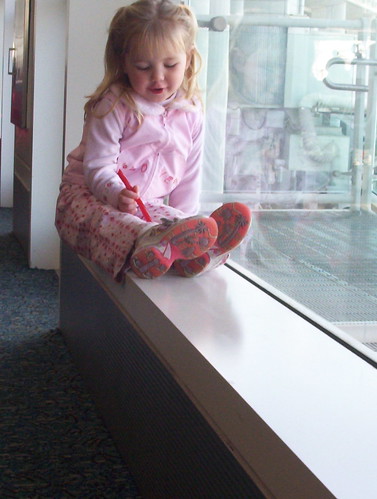 For me, this kind of travel and work is a mindfulness practice. I use these journeys to be very mindful about where I am and what I am doing. Often, when I am en route, I don’t speak to other people at all, preferring to travel in silence, reading, listening to music or podcasts or writing. If I do speak it is only to be polite, get where I am going or ask for help. As a silent meditation I find travelling in this way to be incredible practice, and it brings me to the work I have to do with as much presence as I can. In general I don’t check my emails when I am on the road, preferring instead to give as much attention as I can to the work I have at hand. Fortunately I have my partner Caitlin Frost is back in our office, answering phone calls, sorting logistics with clients and flagging important emails for me. This is an incredible gift as it allows me to be on the road, safe, undivided and present for my clients.
 Seeing travel as a meditation retreat for me shows up in many ways. For example I have a few practices I cultivate on a daily basis and being mindful means focusing on doing them in unfamiliar places with limited access to tools. I try to exercise everyday, and have developed several “hotel room” workouts, that can be done between queen sized beds in small roadside motels. These are 20-30 workouts focusing on strength, flexibility and cardio fitness. Of course, access to a weight room or a gym makes this easier, but it isn’t necessary. Sometimes, if I’m driving and I get tired I pull over and go through a circuit of push ups, sit ups and squats or I run through some of my taekwondo patterns to get the blood flowing and energize my body.
Eating is another area that becomes a mindfulness practice. Because it’s so hard to find good and healthy food on the road, I think carefully about everything that enters my body. Instead of defaulting to restaurants, I’ll often stop in to grocery stores and stock up on fresh fruit and vegetables, pre-mixed salads or healthy instant soups that can be made with only boiling water. Travelling does not have to mean bread, oil and potatoes.
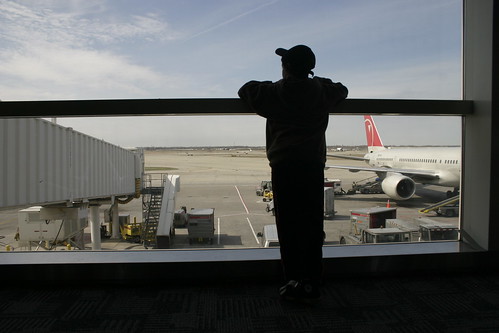 Travelling offers several benefits to the emotional side of mindfulness practice as well. It is a rare trip when everything goes according to plan and delays, changes and inconveniences force me to be mindful of my emotional states and to practice equanimity with people, machines and other pieces of reality that are out of my control. Some of my favourite trips have been those which have gone horribly wrong, with missed connections, bad weather and few options. If I come through those with a minimum of anxiety, the journey and the return home seems sweeter for it.
Travel can be stressful because it breaks our routines and rhythms. We need to become completely dependent on our own resources, carrying everything we need with us. It forces us to make careful choices about what we take and what we do on the road. We have to live differently than we do at home and that forces us to pay more attention to what we are doing. THAT alone is a gift, for if we can use the opportunity to focus ourselves and work with our mind, we can not only travel better, but understand ourselves better as well.
Slow down, be careful and attentive and see what you learn about yourself.
~ Chris Corrigan
Originally Posted at Parking Lot
Sunset Photo Source
Girl at airport photo source
Two children waiting photo source
Waiting at window photo source
Monday, September 1, 2008
I Have Rituals and They Change in the Details of How They Unfold
 I have rituals and they change in the details of how they unfold.
I have a morning practice that I do at least 5 or 6 days a week. The goal of the practice is to have some time for moving my body, some time for meditation and some time for written reflection. Having said that, the details depend on the time available. Some mornings I have only 30 minutes and then it gets pretty compressed. Mostly, I like to have an hour. An hour and a half is delightful (although more and more rare). My morning movement varies – mostly yoga stretches. I try to do at least a few minutes of some kind of stretching.
Recently, I was doing the Presence Process by Michael Brown. Doing that work, my meditation takes 30 minutes to an hour which pretty much squeezes out the other aspects. It also has added an evening meditation.
Other rituals – I call my Uncle Walt weekly. He is 91 and living alone in his own house. Actually, I have a ritual about calling all of my family – so I am in touch at least every couple of weeks.
I do intensive exercise – preferably NIA or yoga 2-3 times a week and try to do some exercise daily. Lots of walking.
I now have a ritual of taking an extensive set of supplements in the morning – but that is new in the last six months.
I mix my Alexander restorative rest and a series of healing visualizations.
So, as you can surmise, this all rises and falls depending on the time available. Some days it is very compressed and not all of it happens and occasionally I actually do it all!
Karma Ruder
kruder@ethicalleadership.org
photo source
Thursday, July 31, 2008
I Deliberately Slow Down My Movements
 As soon as I get up each morning I do 10 minutes of whole body stretching flat on my back on the floor to get back into my physical being - if I don't I feel at odds with the world all day, so I almost never miss (unless I'm on a plane, when I still do some limited stretching!)
After that I deliberately slow down my movements by at least half, even or especially if I'm late and in a hurry. That way I gradually tune into the world around me, eg the birds in the trees, the clouds, the plants growing all around me, rather than just into my preoccupations.
I always try to each lunch alone, as I work with people - the solitude is an oasis of soothing peace in the middle of the day - and if I see someone passing who I know I take care to hide my face, knowing I can spend time with THEM later!
Finally, I walk my dog Steve in the evening in the leafy lanes and fields - again I slow down and just allow whatever wants to come to my attention to do so. Steve seems to do the same, and we make good company for each other.....
David Duffy
photo source
Sunday, July 27, 2008
I Am Nothing If Not A Person fo Ritual
I am nothing if not a person of rituals. Some of them include morning walks with my dog (now dogs) followed by lots of stretching, enjoying my coffee almost like a religion, praying to God when I go to sleep (for some reason I always remember to do this when I'm traveling but not always at home), try to go to church regularly on Sundays, eating a big breakfast in my room when I'm traveling (always the same thing, too). But you get my drift. I need fewer rituals in my life, not more!
~Becky
~Becky
Friday, July 25, 2008
Wow!! I Do Take Care of Myself With My Rituals
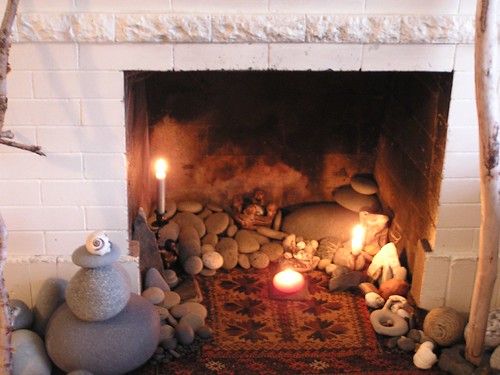 For me… I do a meditation/clearing/intention time each morning consisting of energetically clearing out my house, my office space, and my boyfriend’s house, then putting in white light of the highest vibration into each of these spaces where I spend the most time. Then I call in all helpers/angels etc to assist me for the day (in general and in specific if I am working on something), and then I do the same for my daughter. Sometimes I do it at my altar, other times in bed before I get up.
Currently for the next 2 weeks I am cleaning out my energy field 2x/day after a shaman session I had recently.
I work out 3-4x/week…hike, swim, cardio, weights…
Before I go to sleep I go through the day and get into a space of gratitude for all the things that I enjoyed throughout the day. Occasionally I’ll get to write in my journal.
I have a spiritual book club that I attend 2x/month. I belong to a women’s prosperity circle that we talk 1x/week and do emails during the week to keep our vibration high!
I get Acupuncture (1-2x/month), Massage, Anat Baniel, Chiropractic etc as needed.
WOW!! I do take good care of myself with my rituals!
W.W
Source for Wellbeing
photo source
Wednesday, July 23, 2008
Paying Attention to Relationships and Cats
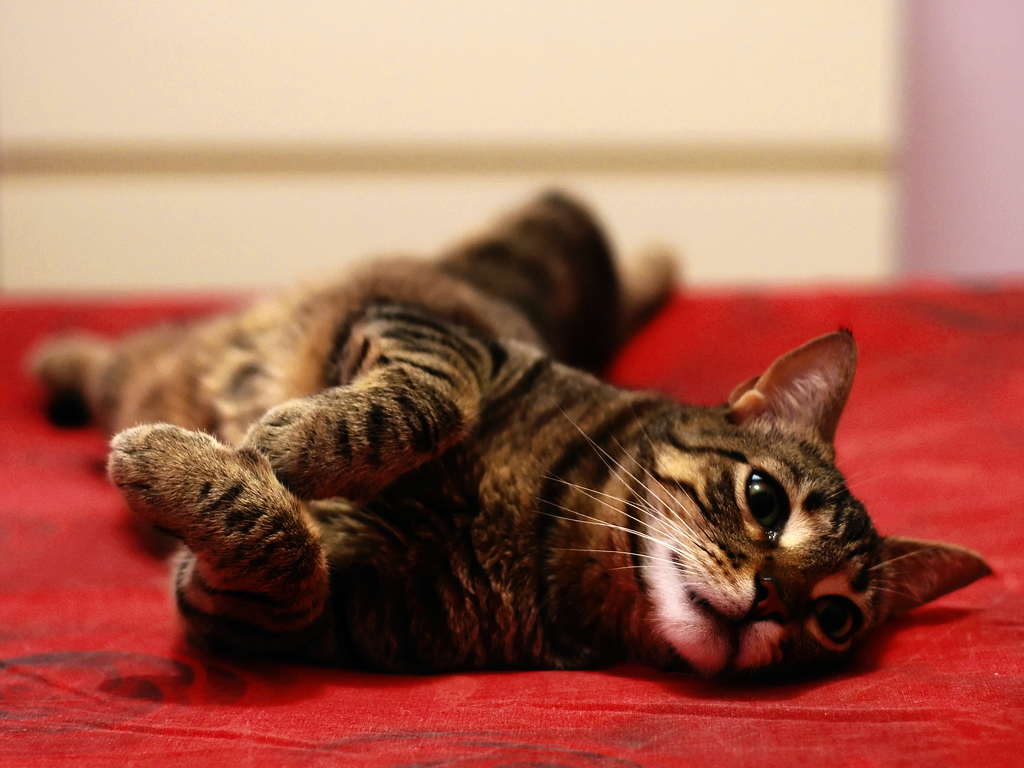 A full account of my own rituals and their history could be a tome in themselves and it's a little daunting to try to share just enough to fit into an email. I'll limit myself to the present and near present, skip a lot of detail and going into why's and wherefore's. You'll see that for me healthy living includes paying attention to relationships.
This morning the clock radio went off at 5:30 p.m. tuned to the CBC radio station with some pleasant classical music. As she does every morning, L said sleepily "Hit the button?" Sometimes it's "Eight minutes?" During this time I slowly come to a sense of the day, the temperature, my urge to cozy down or to get up, what it's like outside, where the cats are - which is usually somewhere on the bed on my feet or in the crook of my knee or between us.
A while later in the kitchen I drink as much water as is comfortable and go into the living room, lay on my back and do some core muscle exercises while stretching my hands over my head. My big cat, Socks Bear, who we have taken to calling Kung Fu Panda, has his own rituals that he performs in a dance with L and me in turn. Cats are very addicted to rituals. Since my hands are out there he butts them and I absent mindedly, since I am concentrating on pulling my stomach in or lifting a leg in the air, grab a front paw or a back paw and tug. He loves it and purrs and pulls until I let go, and there is more of that.
 I then move to the cushion for some half lotus Zen sitting. This is the one element that has almost always been present for over three decades. At this point my other cat Diva, who we have called ninja kitty for some time, as well as various babyish names, comes over for her turn. Little Bear heads off to some ritual with L that I haven't inquired into. Diva used to be able to climb into my hands and curl up completely inside them. Now she climbs in, pushes them apart and settles with chin hanging over my forearm and a slight purr. I wonder briefly about attachment to the pleasure of this trust as I concentrate on counting my breaths from one to ten, eyes open. The world of sound/sight /touch fills my senses, stray thoughts come for an instant or longer and pass by as I return to my breathing. I am amazed at the fullness of life. L comes in for her own meditation and then goes in the other room to turn on the TV for the news. I switch to chakra scanning which shuts out the announcer. As I finish - and Diva knows how long it usually is and will be unbearably cute if I meditate too much longer, doing things like standing up, looking me in the eyes and putting a soft paw on my mouth - I lift her to my shoulders and begin to stand. Socks comes over with a mew, and I pick him up in my arms then proceed to do a Zen one step per breath walk into the kitchen with the two of them. He jumps down to see if L will put her breakfast plate down for him and Diva stays on my shoulders fascinated by things I do in the kitchen. Finally I cut up a few green beans I keep in the fridge and bend down so she can jump off then give them to her as a pre-breakfast snack.
L usually leaves 10 or 15 minutes before me and I have insisted on a ritual good-bye kiss so she calls and I come to the door. We exchange a few sentences, often about logistics. Today it's about the rain and how wet it is.
The meditation awareness comes back to me during the day and often I tune to my breathing and notice the widening of awareness and relaxation it brings.
~anonymous
1st cat photo source
2nd cat photo source
Thursday, July 17, 2008
Centered, Grounded in Purpose and Possibility, Limber and Healthy
 My morning ritual:
Before I'm awake enough to talk myself out of it, I do the 5 Tibetan rites. 20 minutes of mediation follow and then, as I take a shower, I say a multi-part affirmation that I began doing in 1986.
The affirmation was really my first experience of meaningful ritual. It grew out of a workshop called The Wall that was offered through Context Trainings, a cousin to Landmark's Forum. I have no idea what prompted me to begin saying my "definition of success" to myself every morning but I did. Through the years, I have added other elements, including a "stand" (I am Reflecting Pool: nurturing wholeness, creating space for limitless learning, nourishing through purpose) and a question (How am I a spark to grow love's capacity in myself, others and the whole? and its recent partner question: How can we call into being our collective soul so that our many storied world can find its way and each of us our roles in it?).
I added the meditation and Tibetan Rites in 2000 following attending Nine Gates Mystery School.
I believe the meditation centers me and the affirmations ground me in my sense of purpose and possibility. The Rites keep me limber and feeling physically healthy.
Anyway, it is a great way to start the day and I can feel it when I don't take the time in the morning.
Peggy Holman
Open Circle Company
Photo is #2 in the 5 Tibetan Rites
Family Rituals Creating a Physical and Emotional Glow
 Funny you should ask. This has been a big new (or lots of little new) bit in my life. I have started to meditate 20 minutes every morning. I have dance 1x/week and yoga 1x/week plus I'm wearing a pedometer to help me raise my awareness of my activity level with a goal of 10,000 steps a day. This means at least one walk a day or a number of shorter ones. Good for spring weather.
To engage the whole family in better awareness and care of our bodies, I have used the game-generation approach and we have a Wii Fit board which engages with quite a bit of hilarity, a little competitiveness (I am the mother of two boys, remember, one of whom is a gamer who does not leave his chair.) For the last week every evening before dinner we play together. It has created both a physical and emotional glow.
ALl these things help me separate a bit from my work - so much less blogging and blog reading. It is interesting to see the teeter totter of our life's rhythms.
Nancy White
Photo by Nancy
Thursday, July 10, 2008
Exercise or Diets – which is better?
Exercise or Diets – which is better?
Both those who dieted and those who exercised lost a significant amount of weight, according to the study on whether a calorie-restriction diet can extend lifespan. However, while exercisers maintained their strength and muscle mass and increased aerobic capacity, those who dieted lost muscle mass, strength and aerobic capacity.
Exercise-induced weight loss provides the additional benefit of improving physical performance capacity.
Those who dieted lost muscle mass while those who exercised did not. This is because exercisers routinely challenged their muscles, which prevented muscle tissue from degrading. Dieters didn't work their muscles as vigorously as those who exercised.
In addition, once a person loses weight, his or her muscles don't have to work as hard at everyday movements, such as rising from a chair, walking up steps or getting out of a car.
Because they're carrying a lighter load, less demand is placed on them.
The muscles dieters use to carry their bodies "detrain," in much the same way that a weight lifter using less weight in the gym doesn't develop as large of muscles as one who uses heavier weights.
It's important that dieting not be seen as a bad thing because it provides enormous benefits with respect to reducing the risk of disease and is effective for weight loss
In addition, those who exercise may be under the mistaken impression that they can eat more and still lose weight.
A critical requirement for exercise-induced weight loss is that food intake does not increase.
Exercise or Diets – which is better?
Both those who dieted and those who exercised lost a significant amount of weight, according to the study on whether a calorie-restriction diet can extend lifespan. However, while exercisers maintained their strength and muscle mass and increased aerobic capacity, those who dieted lost muscle mass, strength and aerobic capacity.
Exercise-induced weight loss provides the additional benefit of improving physical performance capacity.
Those who dieted lost muscle mass while those who exercised did not. This is because exercisers routinely challenged their muscles, which prevented muscle tissue from degrading. Dieters didn't work their muscles as vigorously as those who exercised.
In addition, once a person loses weight, his or her muscles don't have to work as hard at everyday movements, such as rising from a chair, walking up steps or getting out of a car.
Because they're carrying a lighter load, less demand is placed on them.
The muscles dieters use to carry their bodies "detrain," in much the same way that a weight lifter using less weight in the gym doesn't develop as large of muscles as one who uses heavier weights.
It's important that dieting not be seen as a bad thing because it provides enormous benefits with respect to reducing the risk of disease and is effective for weight loss
In addition, those who exercise may be under the mistaken impression that they can eat more and still lose weight.
A critical requirement for exercise-induced weight loss is that food intake does not increase.
Exercise or Diets – which is better?
Subscribe to:
Posts (Atom)